Most companies don’t have an AI problem. They have an AI adoption problem.
They buy the licenses. They run a workshop. Someone senior tries ChatGPT once, gets an answer that’s slightly wrong or slightly generic, shrugs, and goes back to doing things the old way. Three months later, leadership is asking why the “AI initiative” produced nothing but a line item on the software budget.
Here’s the uncomfortable truth: AI adoption doesn’t fail because the models aren’t good enough. It fails because we bring the wrong mental model to the relationship. We treat AI like a vending machine — insert prompt, expect perfect output — instead of treating it like what it actually is.
Once you understand these four ideas, that changes.
Quick answer: To get real value from AI adoption, treat AI like a brilliant new hire who doesn’t know your business yet (not a magic tool), keep experimenting past the first disappointing demo, break big problems into small AI-sized tasks and recombine the results, and give AI a permanent seat at the table through a dedicated daily “AI coach” chat. Adoption is a habit you build, not a feature you switch on.
1. AI Is a PhD Intern — Smart, But New to Your Business
Imagine you hired the smartest, most well-read intern in the world. They’ve read more books, papers, and case studies than anyone on your team ever will. Ask them about marketing theory, tax law, or Python, and they’ll run circles around most humans.
Now put them in your business on day one, with zero context, and ask them to “handle the client escalation” or “write our Q3 strategy.” They’ll produce something fluent, confident, and completely generic — because they don’t yet know your customers, your tone, your product quirks, or the three deals that fell apart last quarter for reasons nobody wrote down.
That’s exactly what a large language model is. Enormous general knowledge, zero institutional memory, until you give it one.
This single reframe fixes most of the frustration people feel with AI:
- Stop expecting it to “just know” your business. It doesn’t, any more than a new hire does.
- Start feeding it context the way you would onboard a real intern: your product docs, your past examples of good work, your tone of voice, your customer personas, your do’s and don’ts.
- Judge its first output the way you’d judge an intern’s first draft — as a starting point to correct and coach, not a verdict on whether AI “works.”
The mindset shift: you’re not evaluating a product. You’re onboarding a colleague. And onboarding takes deliberate effort from you, not just budget from finance.
2. Keep Trying — One Demo Will Never Prove the Value
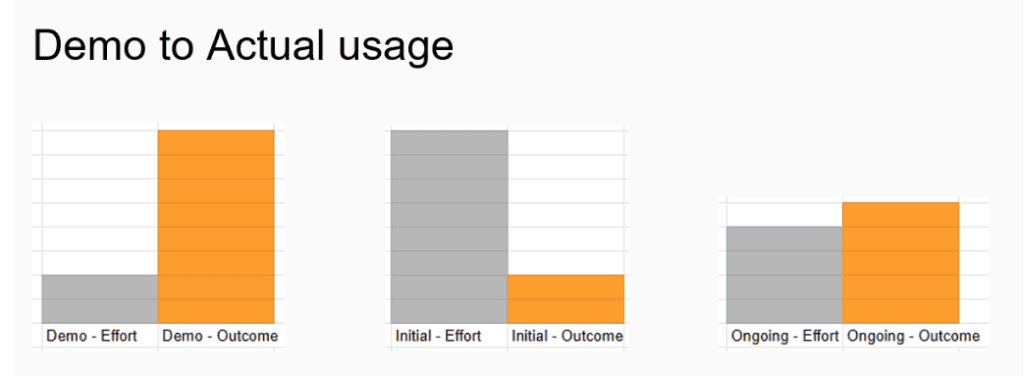
Almost every failed AI rollout has the same origin story: someone senior tried it once, alone, on a hard problem, got a mediocre answer, and declared “it doesn’t work for us.”
That’s not a fair test, and it never was. Think about any skill your team has ever built — sales calls, writing proposals, running a new CRM. Nobody got good on attempt one. AI is no different, except the “practice” is on your side of the interaction: learning what to ask for, how much context to give, and which tasks it’s genuinely strong at versus weak at.
A single individual, trying a demo in isolation, will almost always underestimate AI’s value, because:
- They haven’t yet learned how to prompt for their specific use case.
- They’re testing it on the hardest problem in the building instead of the easiest.
- They give up after one bad answer instead of iterating, the way they would with a junior teammate.
What actually works: treat the first two or three weeks as deliberate practice, not a verdict. Pick a real, recurring task. Try it with AI five, ten, fifteen times. Refine your instructions each time. Value shows up on the trend line, not on attempt one — and the leaders who stick with it for a few weeks consistently end up as the biggest advocates in the building.
3. Divide and Conquer — Break Big Requirements Into AI-Sized Pieces
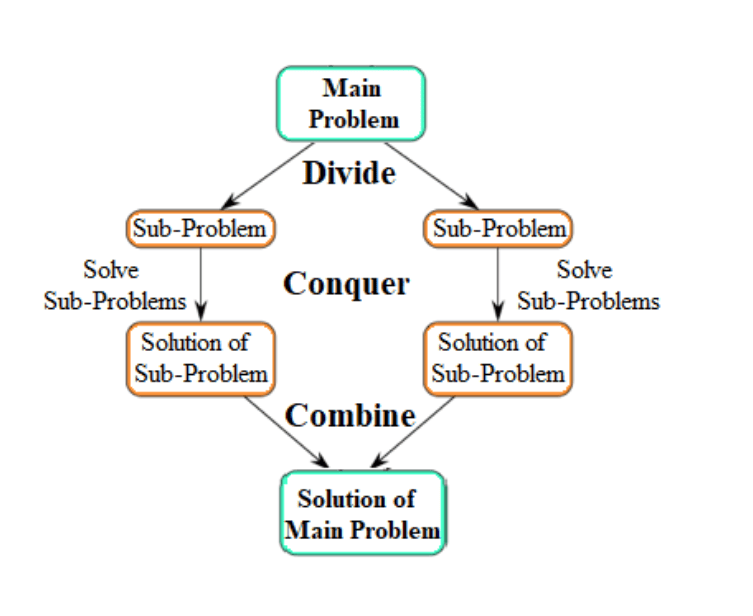
“Write our entire go-to-market strategy” is a bad prompt. Not because AI can’t contribute to a GTM strategy — it can contribute a lot — but because that request is really twenty smaller tasks wearing a trench coat.
AI performs best on well-scoped, well-defined pieces of work. So the highest-leverage skill you can build isn’t “prompting” in the abstract — it’s decomposition: breaking a big, fuzzy business requirement into smaller, sharply defined sub-tasks, letting AI produce a strong result on each one, and then combining and editing the pieces yourself.
A practical example:
Instead of “build our onboarding program,” break it down:
- Draft a first-week checklist for a new sales hire.
- Summarize our last five onboarding feedback surveys into three themes.
- Write three versions of a welcome email in our brand voice.
- Turn our product FAQ doc into a 10-question onboarding quiz.
Each of those is a task AI can do well in a single pass. Stitched together and edited by someone who understands the business, they add up to something genuinely strong — faster than doing it all manually, and better than asking AI to guess at the whole thing in one shot.
The mindset shift: you are the architect and editor; AI is the fast, tireless specialist you assign each individual brick to.
4. Get an AI Coach — Give It a Permanent Seat at Your Daily Table
The fastest way to actually build the habit of using AI is to stop treating it as a tool you open occasionally and start treating it as a colleague you talk to daily.
Practically, that means: rename one of your chat windows — literally — to “AI Coach,” and make a habit of bringing it real questions every day. Not hypothetical questions. Real ones, like:
- “Here’s the email I’m about to send this difficult client — how would you tighten it?”
- “I have three priorities today and four hours. Help me sequence them.”
- “Here’s the objection a prospect raised — what are five ways to respond to it?”
- “Review this decision I’m about to make and poke holes in my reasoning.”
Over weeks, two things happen. First, you personally get sharper, because you now have a tireless thinking partner available for every decision, not just the big ones. Second — and this is the part most people miss — your AI Coach starts to know you. The more context accumulates in that ongoing conversation, the less “PhD intern on day one” it feels and the more “colleague who’s been here six months” it feels.
The mindset shift: adoption isn’t a project with an end date. It’s a daily habit, the same way reading, exercise, or checking your metrics is a habit. The team members who build the “ask my AI coach first” reflex are the ones who end up 3-5x more productive within a quarter — not the ones who attended the best workshop.
Putting It Together: Your First Week
If you only do four things this week, do these:
- Pick one real, recurring task and commit to trying it with AI at least five times before judging the results.
- Write a one-page “onboarding doc” for AI — your tone, your audience, your do’s and don’ts — the same way you’d onboard a new hire.
- Break one big project into five or six smaller sub-tasks and run each one through AI separately.
- Rename one chat “AI Coach” and bring it one real question a day for the next fourteen days.
None of this requires a bigger budget. It requires a different mental model — and about fifteen minutes a day.
You can also choose to have a 3 hours AI office productivity workshop for your team and contact us for the same.
FAQ: AI Adoption for Businesses and Teams
Why does AI adoption fail even when the technology works? AI adoption usually fails because teams treat AI like finished software instead of a new team member that needs context, coaching, and repeated practice before it produces business-specific value.
How long does it take to see real value from AI at work? Most teams start seeing meaningful value after two to three weeks of consistent, deliberate use on real recurring tasks — not from a single demo or workshop.
What’s the biggest mistake leaders make when rolling out AI? Judging AI’s usefulness based on one attempt, usually on a hard, poorly scoped task, instead of iterating the way they would with a new employee.
What does “divide and conquer” mean in AI adoption? It means breaking large, vague business requirements into smaller, clearly defined sub-tasks that AI can execute well individually, then combining and editing the results into the final output.
What is an “AI coach” and how do I set one up? An AI coach is simply a dedicated, ongoing chat conversation — renamed for clarity — that you bring real daily questions to, so it accumulates context about you and your work over time, similar to a colleague who gets to know you.